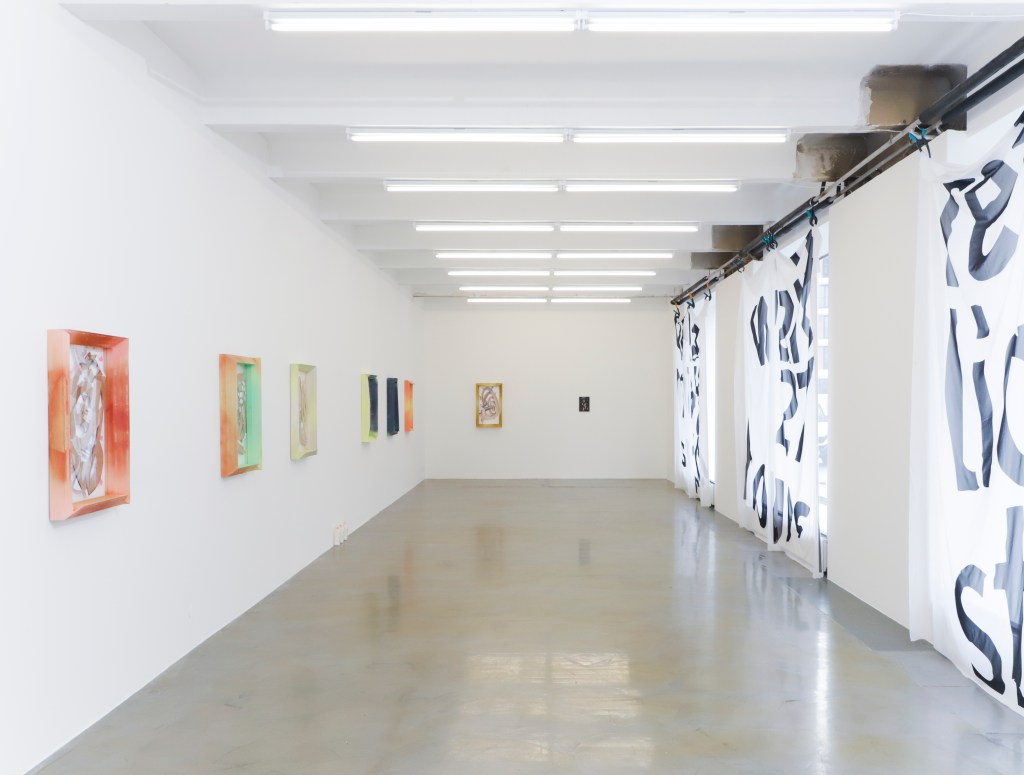
Once repeated, a phrase runs the risk of momentarily losing its meaning before sense can be reinstated in its intended place. Repetition does not occur without a semblance of threat to the symbolic fabric it interpolates. The works of Alexander Jackson Wyatt move along such everyday erasures.
Combining painting, text, photography, and sculptural interventions, at times conjoining them in cyclical self-referencing, Jackson Wyatt’s practice projects a continuous aesthetic transcription. Transcribing is a way of safekeeping and study. An act of care for the ephemeral thought. Unlike translation, it brings with the material trace laid forth by the original. Among its essential features: transposition — the moving or shifting of the transcribed object. As the displacement of fibres in plants (attentively crushed and ground with a mortar and pestle) impacts the potency of the plant’s molecular components, so too the displacement of notions and material traces from the source to its eventual reproduction or adaption impacts the constitution of their ascribed meaning and sense.
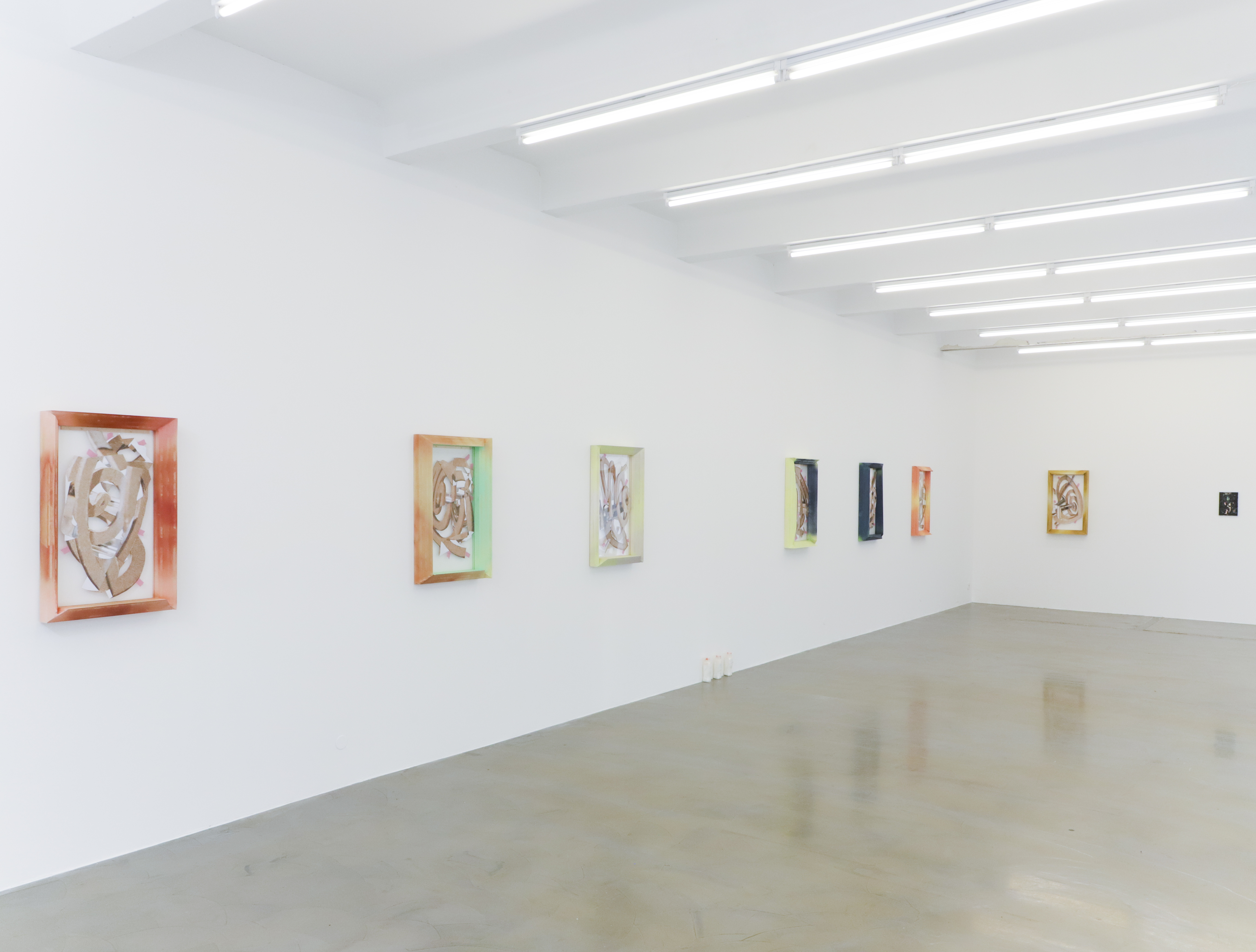
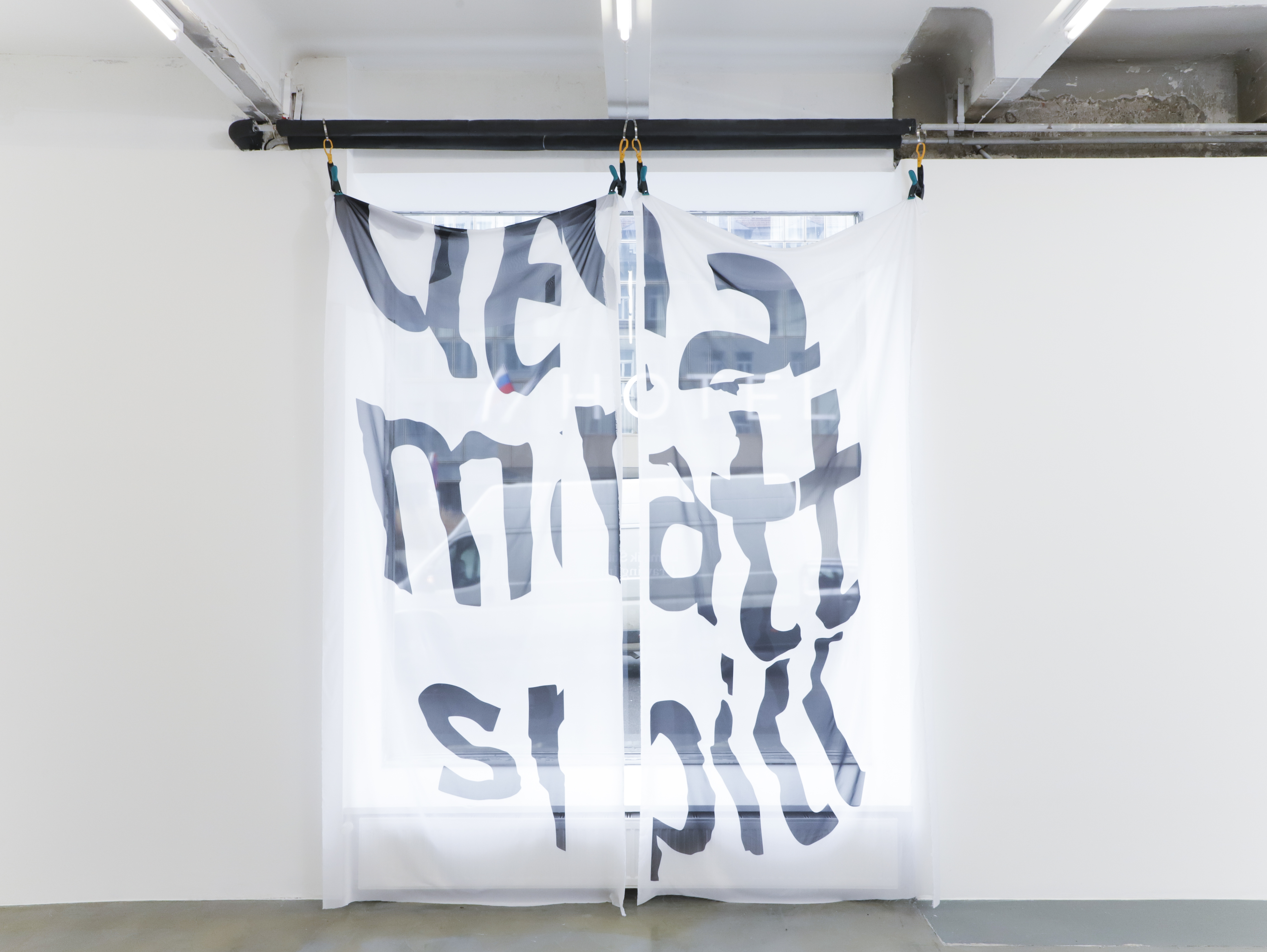
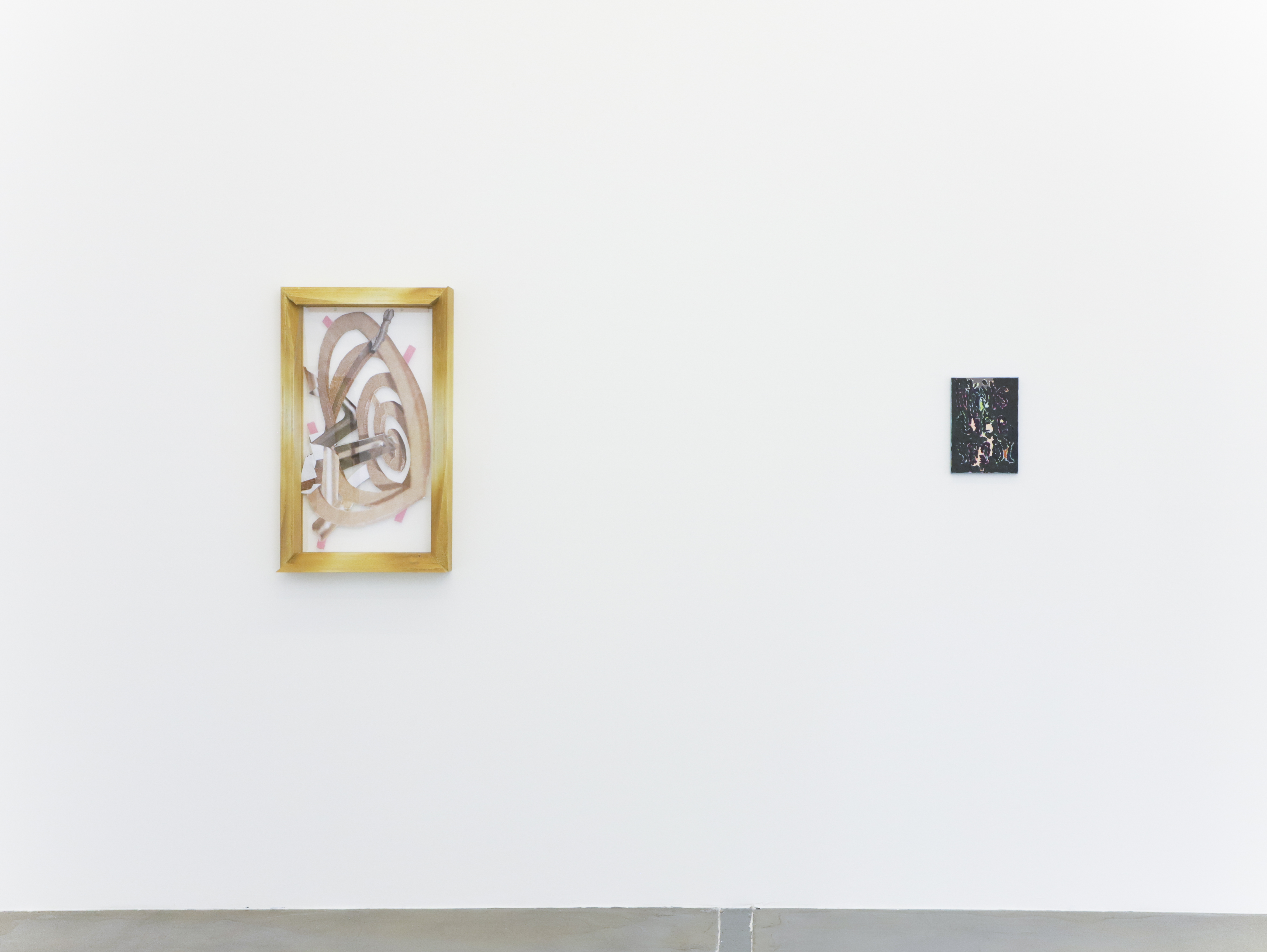
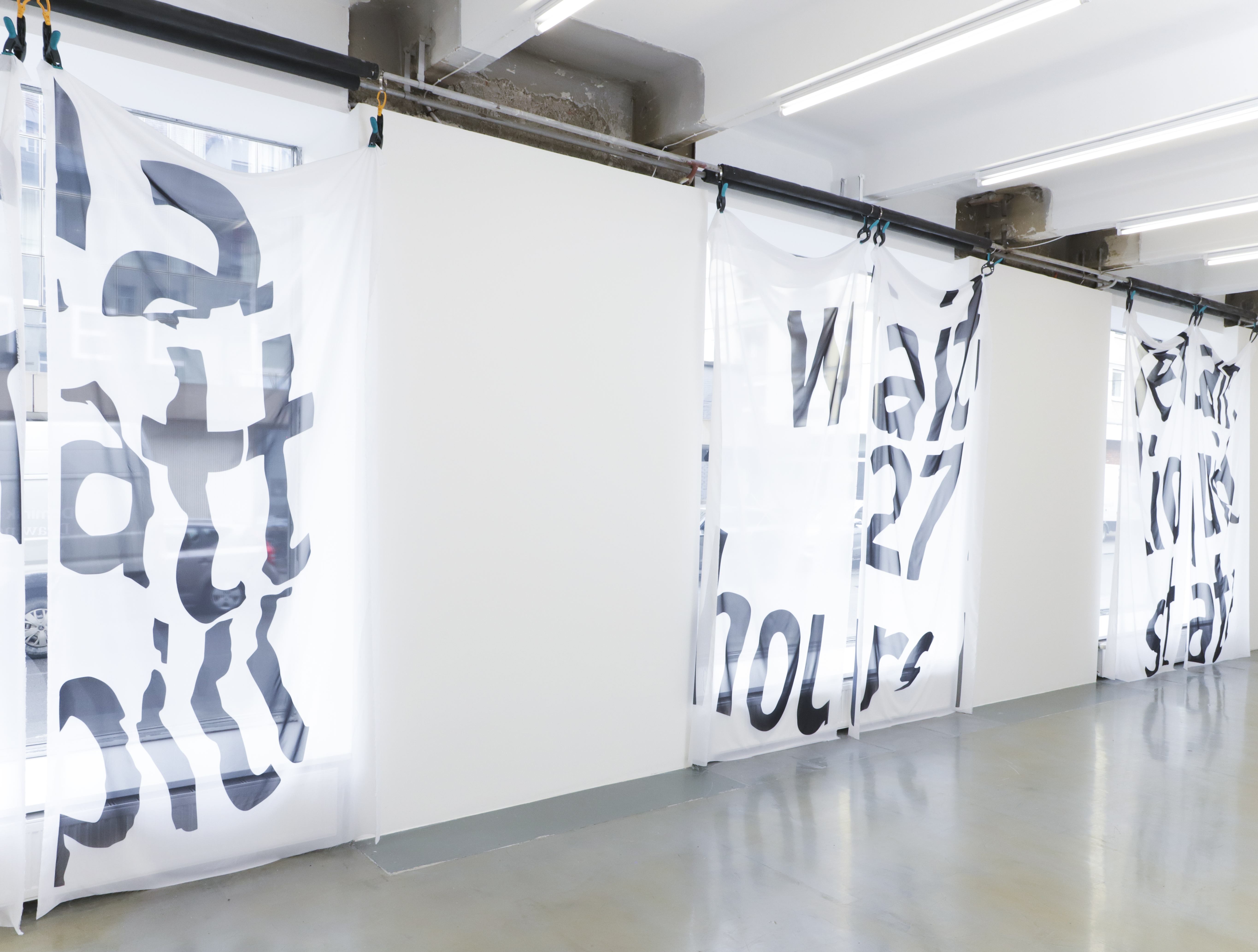
Pulverised Plants Repel Dusty Myths explores the noise of transcription made manifold. An image is created, duplicated, folded and reapplied. The world reproduced in order to be carefully examined and tinkered with. Its primary sense twisted and bent, testing the limits of meaning before sense turns into nonsense.
The gestures of folding and copying occupy Jackson Wyatt’s practice with the plasticity and fervour of philosophical principles. The folding is responsible for the infinite differentiation of the immanent, while the copying instills a semblance of devaluation and dispersion of the differentiated. As such, it remains deeply enthralled by the symbolic matter of every epistemology: that is, language and the objects it is used to describe and address. The images move between acting as objects (reduced to their core materiality) and acting as language (nonetheless, retaining the symbolic mesh to which they belong). The paintings touch on the material viscosity of human expression — meaning being reduced to a vague sense, words appearing as distressed matter —, while the frame pieces bring out the robust materiality at play in objects and their innate “objecthood” — their ability to occupy spaces both of memory and function. In the move from the stated to the reiterated, that which is repeated comes to bear the mark of emergent change.
Alexander Jackson Wyatt (b. 1989) studied painting at the National Art School in Sydney, Australia (2007-2010). He studied with Armin Linke and Michael Clegg (Clegg & Guttmann) at the HfG/ZKM in Karlsruhe (2012-2013) before moving to Vienna to study with Heimo Zobernig at the Academy of Fine Arts (2014-2017). He has worked across Australia and internationally, with residencies in Italy (SUDLAB, Naples 2013, Emporio Amani, Milan 2013); Germany (Spinnerei, Leipzig 2012); and Australia (National Art School, Sydney 2013, Cementa, Kandos NSW 2014). Notable prizes and grants include the Artstart Grant from Australia Council for the Arts (2012); Emporio Armani Commission (2013), the National Association for Visual Arts Australia (2014); CAL Cultural Fund, Australia Council Commission, Australia (2015), NSW Artist Grant, Australia (2019); BMKOES Project Grant, Austria (2021, 2022); and an Stadt Wien einzelvorhaben grant (2022). He was artist in residence at CCA Andratx in Mallorca, Spain in 2022 with an upcoming residency at Atelier Fidalga in Sao Paulo, Brazil in 2023. Recent notable exhibitions include SCAMMING at the Palazzo Lancia in Turin, Italy (2017); Dream’n Wild at ALASKA Projects, Sydney Australia (2018); Immuremnt at Station Gallery in Melbourne, Australia (2019); Musikalische Vorschau (with Nicolas Jasmin) Belvedere 21, Vienna 2019; Language Strategies at The Austrian Cultural Forum, London, UK 2018; Kites and F*ckups at Kunstverein Klagenfurt in Klagenfurt, Austria 2022 and Rare Earth Magnet at EXILE, Vienna Austria.
 emaograjensek