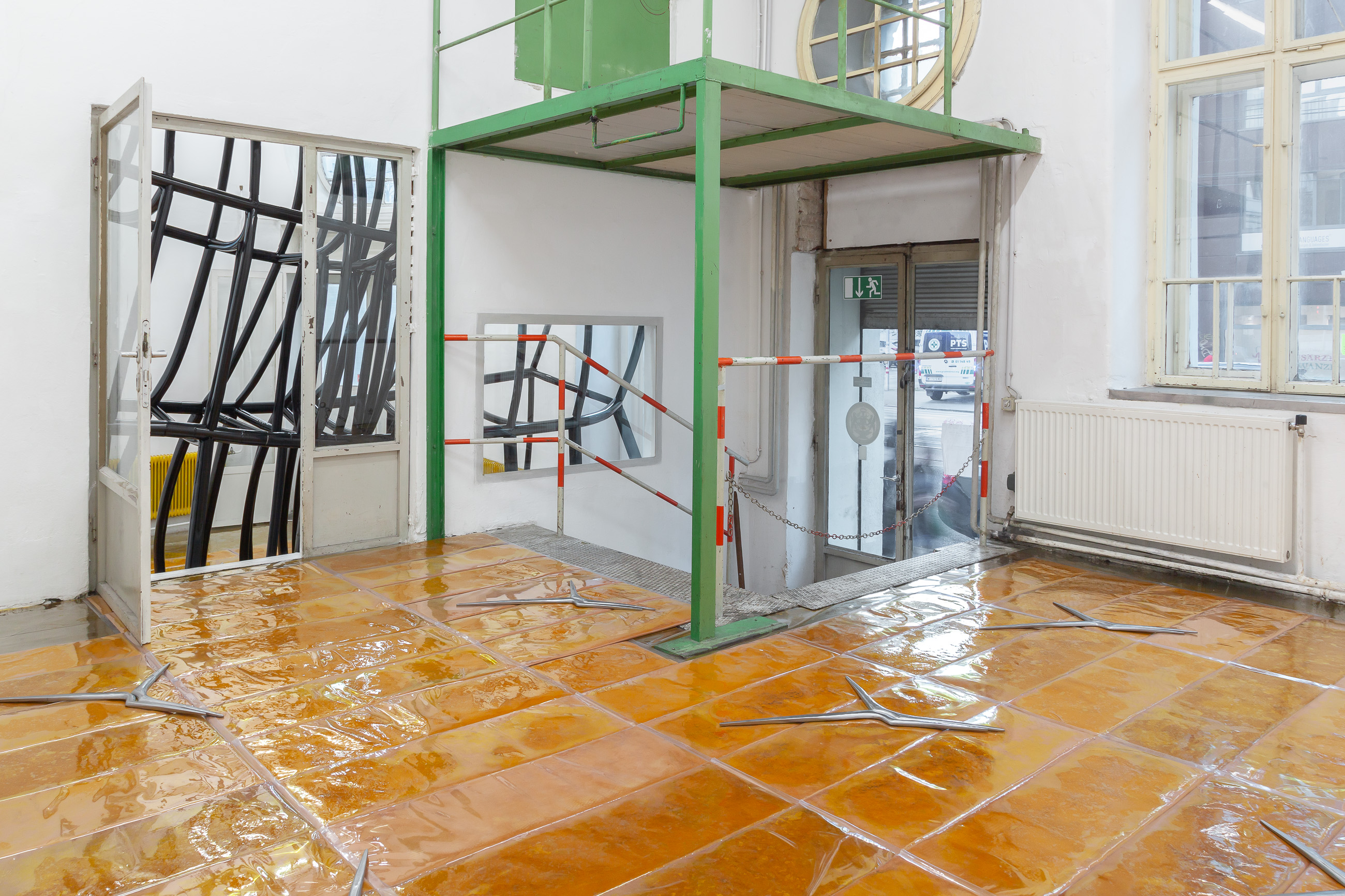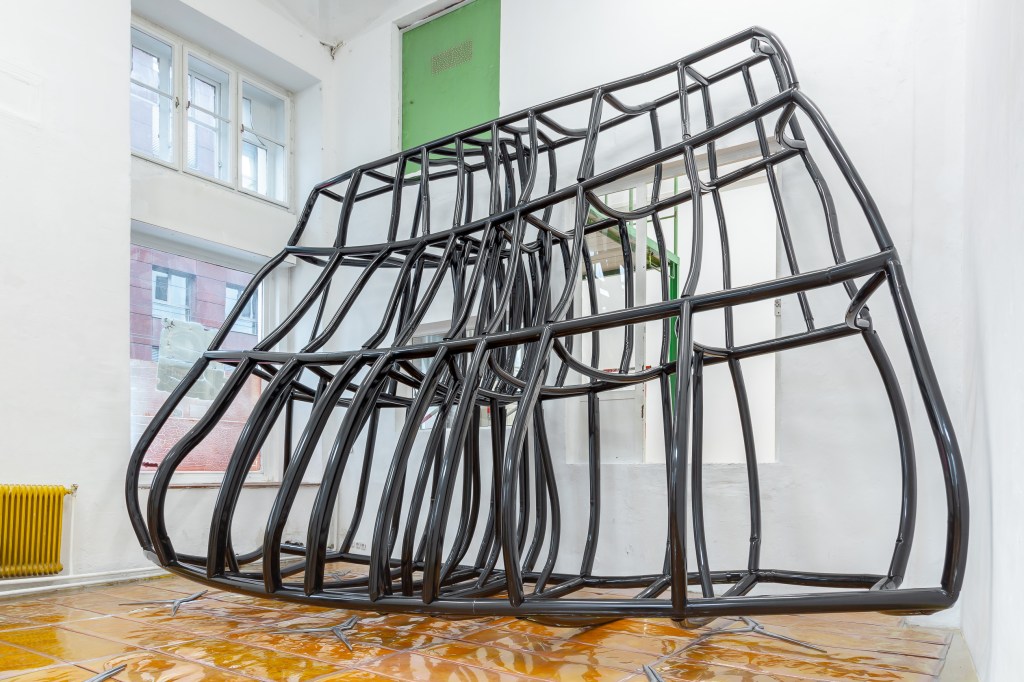
Surge brings together projects by Andrej Škufca and Neja Zorzut, two emerging Slovene artists who have helped shape a new wave of Slovenian art tackling the interplay of intelligence and matter. The exhibition explores the collision of infrastructure, technology, and the human body, as well as their effect on the expanding medium of sculpture and installation, highlighting the medium’s capacity to account for the broader material processes that transcend our individualised, embodied perspectives.
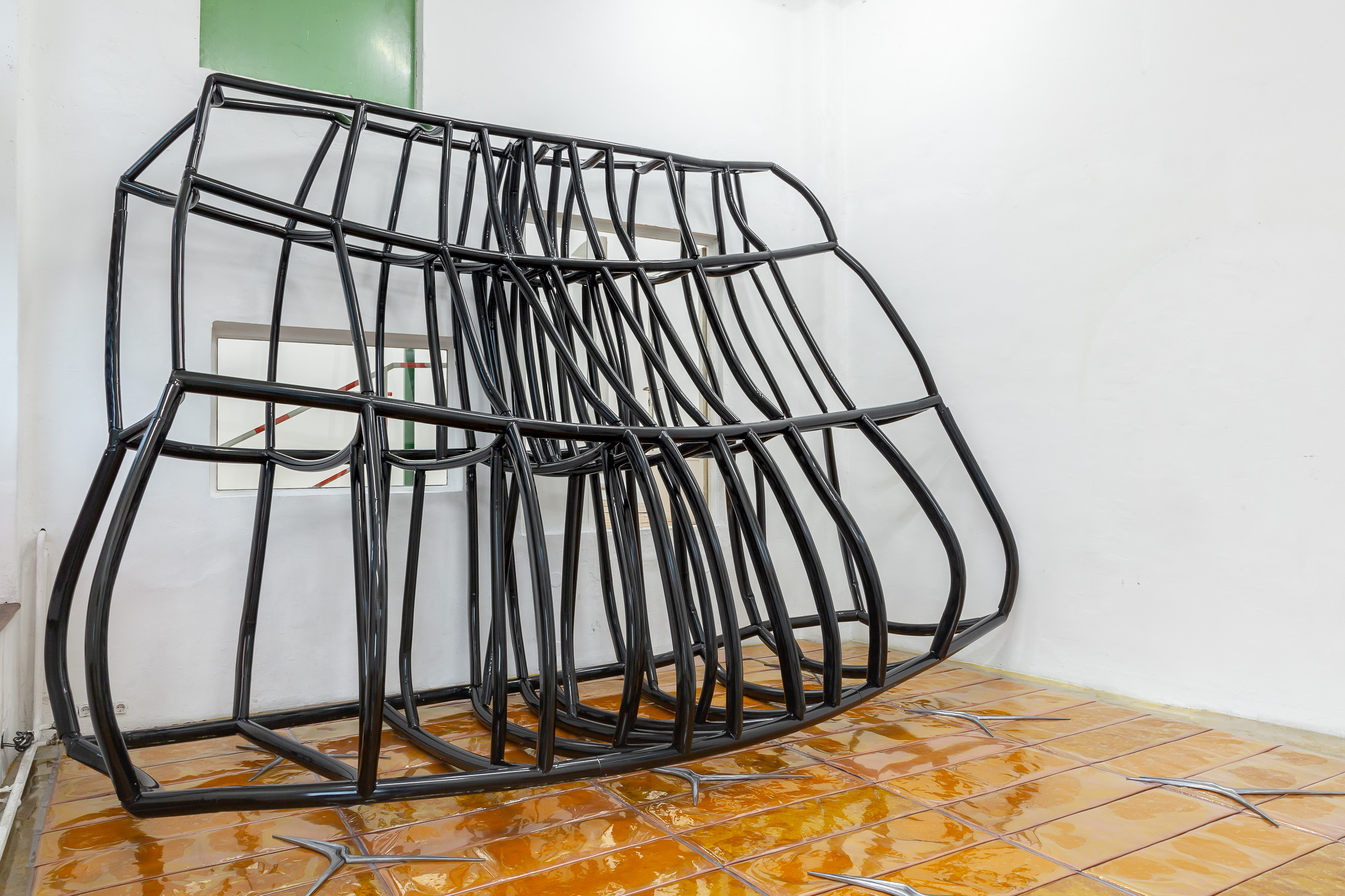
Andrej Škufca’s practice is considered a sculptural amalgamation of fiction, design, and industrial production. His works take shape as scenes of infrastructural emergence, leaning on the principles of fictioning and speculation to bring forth visions of threatening autonomy.
Škufca’s speak in ways suggests a timeline of what to us may seem as an abandoned technological artefact – stripped of a point of origin or apparent symbolic function/use. While seemingly static, speak in ways harnesses the curiosity of the artist to continually activate and maintain it, furthering its expanding reach and establishing a performative aspect that begins as a hypothesis and materialises with each subsequent activation — the suggested expansion of form instilling a sense of unease, and at times, horror.
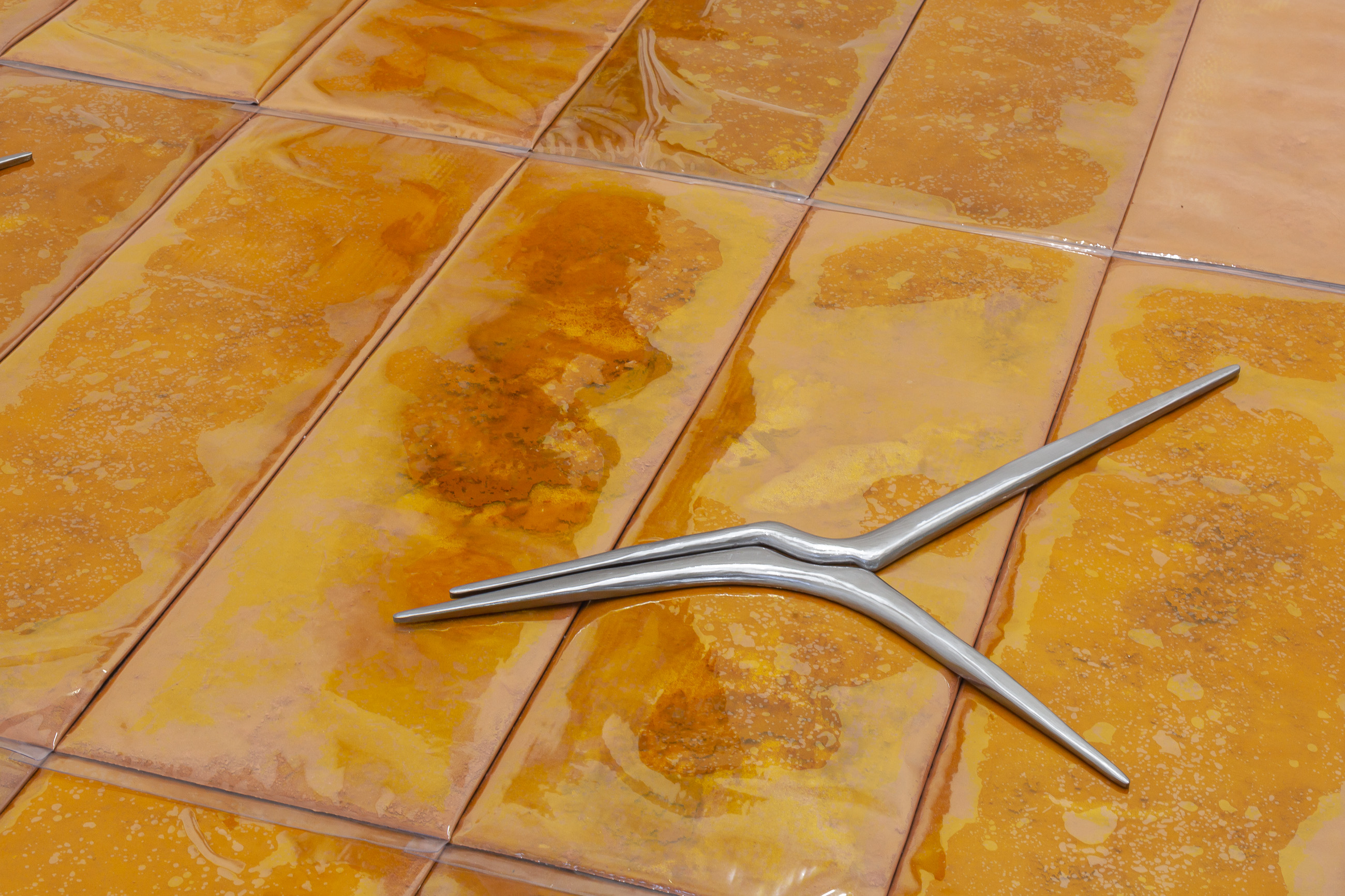
Neja Zorzut, by contrast, delves into the unfamiliarity of the body exploring its autonomous, violent, and unpredictable aspects that render it alien. Her work tends to transcend the conventional binaries between subject and object, human and environment, investigating phenomena that defy or disrupt the very categories we rely on to comprehend them.
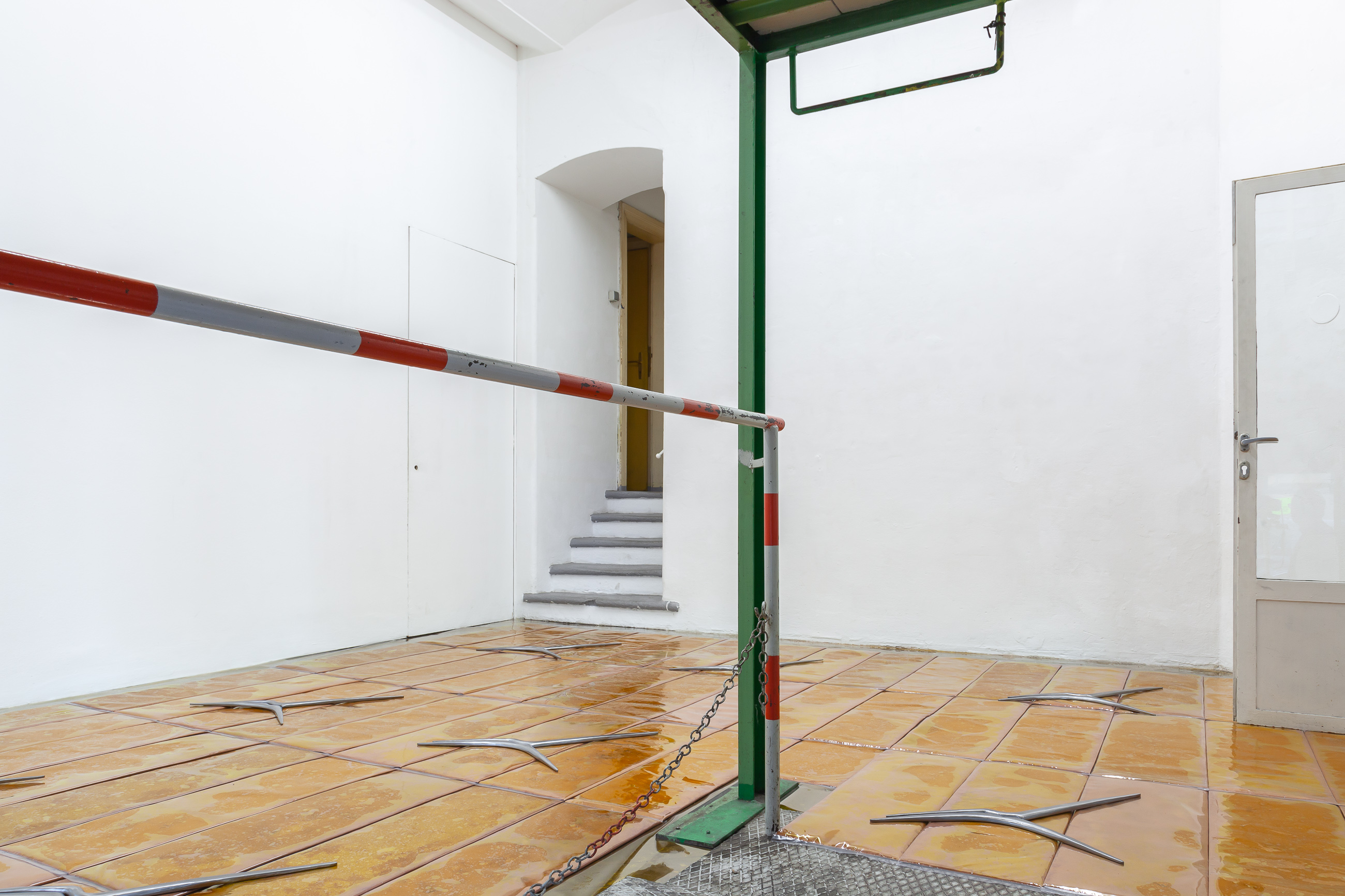
With Backlash, the artist presents a floor-based environment, consisting of sculptural objects that invite the viewer to walk across them. The installation touches on the almost instinctual association between closeness, fragility, and danger. It references the simple yet sophisticated design of war contraptions like the anti-personnel mine, the Roman caltrop, or the Japanese makibishi — the shape of the latter two derived from nature, modelled after the seeds of the water caltrop, whose wide, sharp ends are known to pierce skin when pressed or stepped on.
Through their contrasting but complementary approaches, Škufca and Zorzut expose the undercurrents of unease that pervade our relationship with the ever-shifting boundaries of control, urging viewers to confront the latent potential for disruption inherent in the systems and bodies that surround us. Their work explores form as a dynamic, adaptive intelligence, expanding their respective mediums, while rejecting the notion of ‘anything goes’. Instead, they align with attempts to engage with and participate in the infrastructural and planetary processes that shape our contemporary existence.